 EN
EN

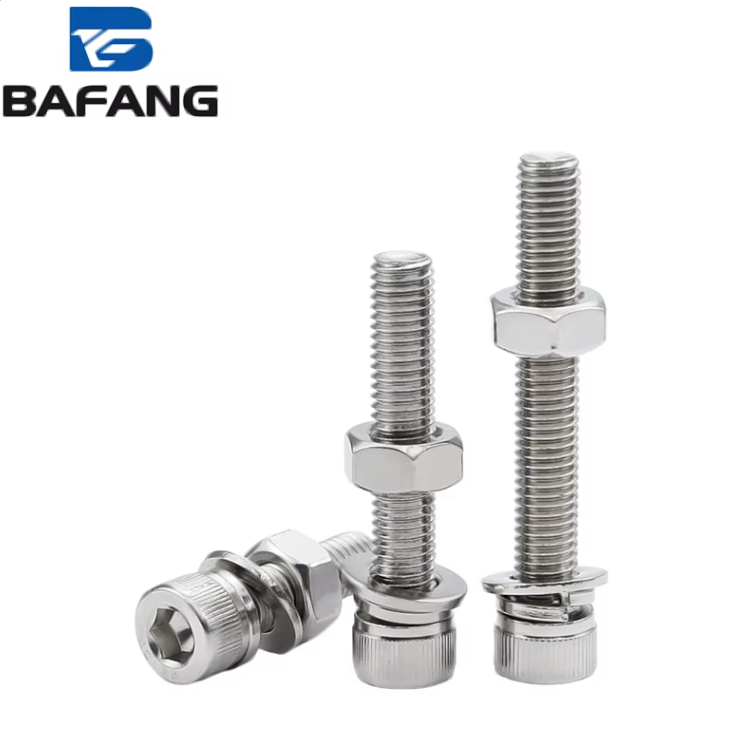
Thread pitch is not just a thread count
Thread pitch is the distance from one crest to the next. On a hex socket screw, that number changes more than how fast the screw goes in. It affects thread flank contact, minor diameter, stress area, and how load moves into the female threads. Two screws can share a nominal diameter and still act like different fasteners. A M12x1.75 coarse thread and a M12x1.25 fine thread both fit a 12 mm hole. The fine one has a lower lead angle, a slightly larger minor diameter, and a different preload curve. Holding power starts with clamp load, not thread count alone.
How pitch changes preload and stress area
Preload is the tension created in the screw when torque is applied. The torque-tension relation T = K x F x d shows friction and diameter matter, but pitch affects the thread geometry carrying that tension. Fine pitch threads have a smaller lead angle, so less torque is lost to thread friction and more can become clamp load. ISO 898-1 uses stress area to set mechanical properties, and that area depends on pitch. A M10x1.5 coarse thread has a nominal stress area near 58 mm2, while a M10x1.25 fine thread is closer to 61 mm2. That small jump can change how long a joint stays tight under vibration.
| Pitch example | Lead angle | Approx. stress area | Vibration resistance | Installation tolerance | Typical use |
|---|---|---|---|---|---|
| M10 x 1.5 coarse | Higher | About 58 mm2 | Lower without locking feature | More forgiving | General assembly, soft materials |
| M10 x 1.25 fine | Lower | About 61 mm2 | Higher with proper preload | Less forgiving | Vibration, thin walls, precision |
| M12 x 1.75 coarse | Higher | About 84 mm2 | Lower without locking feature | More forgiving | Structural, castings |
| M12 x 1.25 fine | Lower | About 92 mm2 | Higher with proper preload | Less forgiving | Machine mounts, dynamic loads |
The table is a guide, not a ranking. A fine pitch screw with poor preload can still walk out. A coarse pitch screw with the right torque, washer face, and thread locker can hold well.
Coarse versus fine pitch under vibration
Vibration is where pitch gets blamed for problems that start somewhere else. A joint loses clamp load when threads slip, when the bearing surface sinks, or when the bolt stretches beyond elastic range. Fine pitch helps because the lower lead angle makes back-off harder. DIN 65151 and Junker tests often show better vibration resistance when fine threads are combined with high preload and controlled friction. Fine pitch is not a magic lock. If the female thread is damaged or the torque wrench is out of calibration, the finer thread can loosen just as fast. Coarse pitch installs faster, tolerates dirt and minor damage better, and often performs better in aluminum, plastic, or cast iron where thread stripping is the main risk.
Where fine pitch wins and where it backfires
Fine pitch is a strong choice for dynamic loads, thin-walled bosses, and length adjustment. It gives more threads per inch of engagement, better self-locking behavior, and a larger stress area for a given nominal diameter. It also allows finer preload control. However, fine pitch needs cleaner threads, better alignment, and more care during assembly. Cross-threading is easier, and galling on stainless steel becomes a bigger concern. Coarse pitch is usually the better default for rapid assembly, dirty environments, and softer base materials. The right answer depends on the joint, not on a catalog preference. A threaded connection is a system of screw, nut or tapped hole, washer, coating, lubrication, and load path.
A plant case where pitch and preload decided the outcome
In a polymer plant on the Gulf Coast, a vibrating screen motor base kept losing its mounting screws. The original M12x1.75 hex socket screws were replaced every few weeks. Inspections showed no stripped threads, but the screws had lost preload and several showed wear on the thread flanks. The base had a soft shim stack, and the torque value had been copied from a different assembly. The team switched to M12x1.25 fine pitch screws, added hardened washers, cleaned the tapped holes, and set torque based on the actual clamp load target. The loosening stopped. The lesson was not that fine pitch always wins. The real fix was controlling preload and bearing surface. The pitch change helped the joint resist back-off once the rest of the system was corrected.
Stocking and machining choices that support the right pitch
A diverse fastener program should treat pitch as a performance feature, not a line item. 1. Track which joints have vibration problems. 2. Confirm the tapped hole class and material. 3. Match coating and lubrication to the torque target. 4. Keep both coarse and fine pitch hex socket screws for critical sizes. 5. Verify incoming pitch with gauges, not by eye. For non-standard or mixed-lot production, a manufacturing partner with cold heading, CNC machining, and thread rolling capability can hold pitch and lead accuracy across batches. Bafang Metal works with forging, cold heading, CNC machining, stamping, and surface treatment under one roof, which helps keep thread geometry, material grade, and coating consistent for custom fasteners.